There’s something magical about “Cry of the Celts” playing loudly over one’s surround sound, or better yet, the speakers from the stage. The rich sound of heavies (the hard shoes that sound like tap shoes) drumming against the floors, the thrum of the violins and drums reverberating through your chest. It is a sensation so visceral and emotional that it nearly brings me to tears recalling it.
My favorite version of the finalé
When I was a young child watching my mother’s VHS tape of Riverdance (1995) and later Lord of the Dance (1997), I was enthralled and enamored with the colorful displays and story. The sight of Michael Flatley crossing the stage as if his feet were wings. Light and powerful. The force of his shoes hammered loudly like my heart in my chest.
Never before had I been exposed to something like it, and I would come back to it day after day for many years after school like some sacred ritual.
One day, I watched Feet of Flames (1998), my favorite in the series, after school. My eyes were alight with the dazzling lights, astounding costumes, and the charisma of the characters I had come to love so dearly. I looked at my mother, enjoying her afternoon coffee and paper.
“Mom, do you think I could do this?”
“Do what?”
“Take Irish dance? I would love to perform Riverdance one day!”
Peering over the top of her paper and her glasses, she eyed me with a smile before bursting into laughter.
“They would never take you.” She huffed after her laughing fit.
“But why, why not?”
“There are no Black people in Riverdance.”
I felt a part of me die that day. A small innocent part that would one day be resurrected after years of self-love and therapy.
This is a formative memory for me and cements a moment in time when I learned two important things:
- Racism was not over, as I had been told by my mother and the White teachers at school. I was alive and well and lived a very comfortable life in my home and family.
- That I was markedly different from the people who surrounded me in my majority White town and those whom I idolized on television and in media. Not only because of my race but other identities such as my gender and sexual orientation.
I had sensations of these feelings before. In school, when I was picked on because my natural hair was “too big” or when my next-door neighbor told me my skin was “only brown because I was dirty.”
But from my mother, who had often told me my skin was beautiful; that I was beautiful. It was incredibly hurtful and damaging to my sense of self.
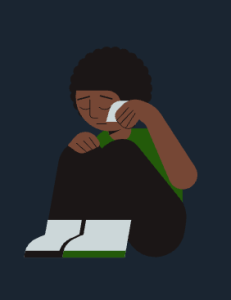
This was one of the first times I realized that she saw and placed limitations on me based on my race.
As an aside, it healed my heart and soul when I saw Morgan Bullock, the first Black girl in Riverdance’s 25-year history, take the stage. She is the dream that I had as a young child. She proved my mother wrong and made me, a stranger who still loves Irish dance to this day, so very proud.
I share all of this to provide context to some of my experiences as a biracial person who has often felt trapped between worlds. But that is a tale for another time.
Experiences like this helped shape who I am and how I conceptualize ideas of injustice, oppression, prejudice, stereotypes, etc. I realized very young that people you love and who allegedly love you can hold prejudice against everything you are and even view it as something that does not need to be fixed or acknowledged.
I love my mother dearly. She was very special to me and showed her love for me in many positive ways in my life. And she also had this side to her that was incredibly hurtful and harmful to me as well. It is significant to recognize that in the context of my story.

When I think of what it means to me to be a liberatory educator and practitioner in the justice, equity, diversity, and inclusion space, I remember those feelings and sensations I felt as a lonely, traumatized, and ostracized child.
I never want to make someone feel like I have felt time and time again. That their dreams of being an Irish dancer, a doctor, an artist, or a mermaid should be limited by something so trivial as the color of their skin, who they love, how they dress or decorate their body, or anything else.
It is my commitment to the world (and myself) that I work to undo my own toxic socialization, so I do not replicate the harm I received unto others. I will leave this world and my community a healthier and better place. That is my promise and my charge.
What about you? Have you ever felt someone was limiting your potential because of your identity? How did that experience make you feel? What commitment(s) have you made to yourself and others due to that experience?
Please join the conversation and post your response on my blog or social media comments. Together we can make the world a better place!
In Solidarity,
Kei Graves, Ph.D.
 Dr. Kei Graves, Ph.D
Leave a comment