For my preliminary blog posts, I want to take the time to describe my positionality to the adjectives listed in my tagline. The first and perhaps most important is the notion of being “liberatory.” To understand liberation, I believe it is essential to understand what it is not and then position that in the context of my understanding and approach.

Defining Oppression
Let me start by stating that this is a complex subject that I’ve spent many years studying through my doctoral research. I also approach this topic from the lens of the United States rather than the world at large. Oppression manifests differently in various environments, cultures, and geographic locations. While there may be shared characteristics, I do not want to oversimplify this topic. I will be brief in my discussion as you will have the opportunity to learn more about this subject in my dissertation and forthcoming book.
Oppression is the process of one social group dehumanizing another through macro (systems/structures) and micro (interpersonal) means, including through laws and policies. It is harmful to all people, including those who perpetuate the oppression.
Power is central to how oppression is perpetuated and maintained (check out the link for a deeper dive). Therefore, the groups which hold power through their control or domination of macro and micro systems can oppress other social groups. Note, power can manifest through:
- Force ( through military or policing),
- Access to resources (including money),
- Government action (through legislation, who is in office, etc.)
- Social/cultural norms (such as what people designate as acceptable or correct),
- Ideas (like changing perspectives on equality or the movement towards anti-racism post George Floyd), or
- Whether a group is in the majority or minority numerically.
These elements also contribute to power and, consequently, the use of that power. Power is perpetually present whether one exercises it or not.
Oppression causes trauma. While these traumas may not always be debilitating, they still cause harm. Just as two people can experience the same car crash and walk away with two different reactions to the event. No two people react to oppression in the same way. What may be a minor incident to one person could be incredibly painful for another. Both still experience the hypothetical car crash but walk away with different injuries.
Oppression is factual, not driven by false perceptions of being oppressed because of inconveniences.
Oppression burdens individuals’ time and resources. During my dissertation research, this concept was essential to participants. They mentioned it more often than commonly discussed forms of oppression such as marginalization, microaggressions, or even abuse and trauma.
Oppression results in individuals expending more of their money, time, and holistic selves in an attempt to survive. I believe nothing more clearly illustrates this reality than the attacks being waged on schools to produce Freedom of Information Act (FOIA) requests. Schools that have received only a handful of these a year have recently received hundreds. This strategy purposefully overwhelms districts conducting important work for students to learn the value of diversity, including others, and foster belonging for themselves and their peers. These strategies take away valuable time, resources, energy, and drive to complete this necessary work in schools. And when combined with threats or acts of violence toward school administrators and board members, those who have historically committed to doing this work pause or leave the education field entirely.
Oppression is factual, not driven by false perceptions of being oppressed because of inconveniences. For example, factual oppression would include the tangible and real ways oppression manifests (e.g., violence, marginalization, and so forth) against specific social groups and communities.
In contrast, subjective oppression includes false perceptions of being oppressed, such as a straight person feeling oppressed when queer people gain the right to adopt children or a White person being upset by the representation of characters of color in fantasy series. These false perceptions are not actual oppression, despite how someone might feel at the moment.
Defining Liberation
Liberation, then, is the antithesis of oppression and its absence. Liberation has many synonyms, like freedom, emancipation, and abolition. I often use anti-oppression and liberation interchangeably, for they are synonyms in my mind.
Liberation involves a commitment to challenging and changing systems and institutions such that all members of society are humanized and free from the side effects of oppression. Allow me to illustrate this concept using sexism as a form of oppression.
Sexism is prejudice, discrimination, hatred, and inequity directed towards women and femme people. Women and femme people are the targets of sexism which attempts to hold them to specific standards, gender roles, expressions, activities, and more. Sexism rationalizes harmful actions against women and femme people. Salient examples include attempts to legislate their bodily autonomy, inequitable dress code policies that disproportionately impact them in schools and workplaces, and threats of violence if they deviate from specific values, norms, actions, and beliefs. Sexism is informed and sustained by patriarchy.
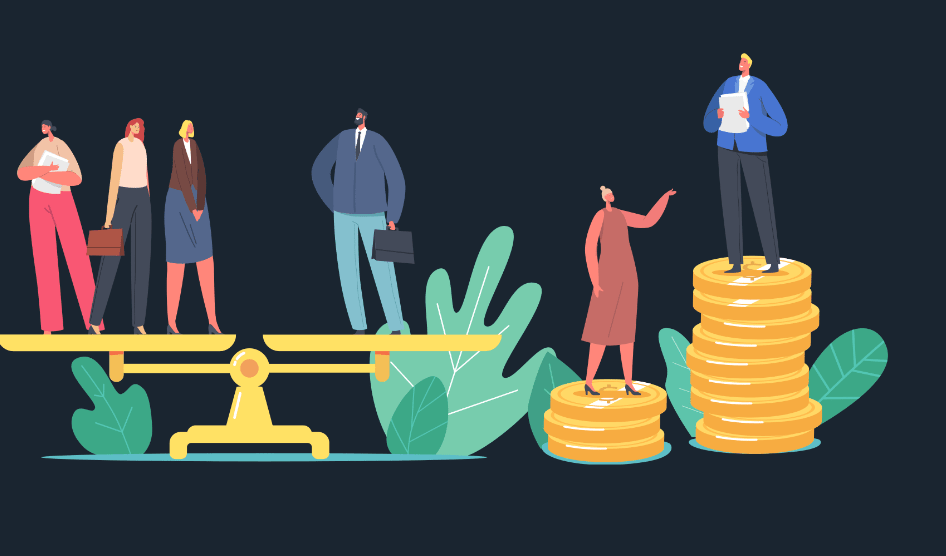
Liberation requires education that cultivates critical thinking and the ability to question our beliefs, norms, and values
Patriarchy is a system of oppression that prioritizes men and masculinity while undervaluing women and femininity. It harms women and femme people through sexism as the weapon of choice against them. While men and masc people hold power under patriarchy, it also harms them. Socialized beliefs and values demand they constantly be in control of their emotions and not display them (unless it is anger). And they cannot enjoy or participate in activities perceived or designated as “feminine” without being judged as deviating from a specific gender role or expression (i.e., Toxic Masculinity).
Liberation functions to dismantle the system of patriarchy by eliminating the manifestations of sexism and other by-products of patriarchy, such as toxic masculinity, misogyny, etc. Which consequently frees women, femme, men, and masc people from the structures that socialize and legitimize these forms of oppression.
Liberation requires education that cultivates critical thinking and the ability to question our beliefs, norms, and values. From there, we can make informed decisions about who we are, what we believe, and why we believe it. We can take action for fairness and address oppression’s historical and contemporary harm.

Liberatory Education
As an educator, being concerned with liberation means committing to challenging systems of harm within learning environments, whether K-12, higher education, or adult learning environments.
It means posing questions that encourage learners of all ages to think about their communities and lived realities. To position themselves as members of a highly complex society resulting from historical events that they may or may not have participated in or been alive to observe. To dream and grow the skills necessary to create the wondrously beautiful, accessible, free world we can collectively create through working across our differences for the common good.
Join me on this journey as I share specific strategies, skills, and resources to move towards this vision of liberation.
In Solidarity ✊🏽
Kei Graves, Ph.D.
 Dr. Kei Graves, Ph.D
Leave a comment